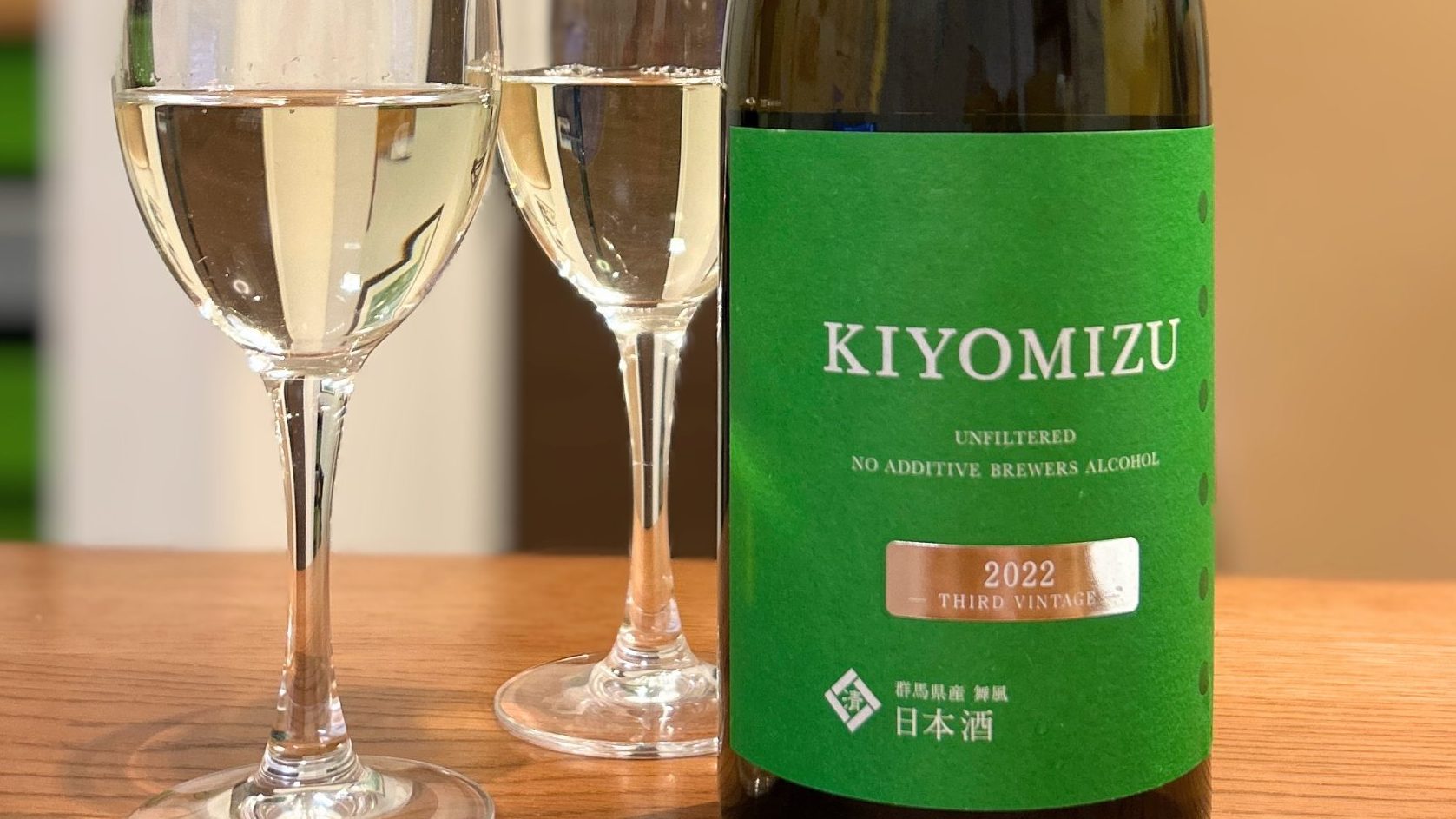
When we think of sake, we often imagine a world steeped in tradition and history. However, sake is constantly evolving. Today, I’d like to introduce “KIYOMIZU 50 2022 VINTAGE”, crafted by Shimizuya Brewery in Tatebayashi, Gunma Prefecture.
Shimizuya Brewery has a unique background—it was once closed in 1985 but made a remarkable comeback in 2010, thanks to the determination of its 6th-generation owner. While many sake breweries are disappearing, it’s rare to hear about a revival story. It reminds me of Kagamiyama Brewery in Kawagoe, which also made a comeback after closing.
A Striking Bottle Design
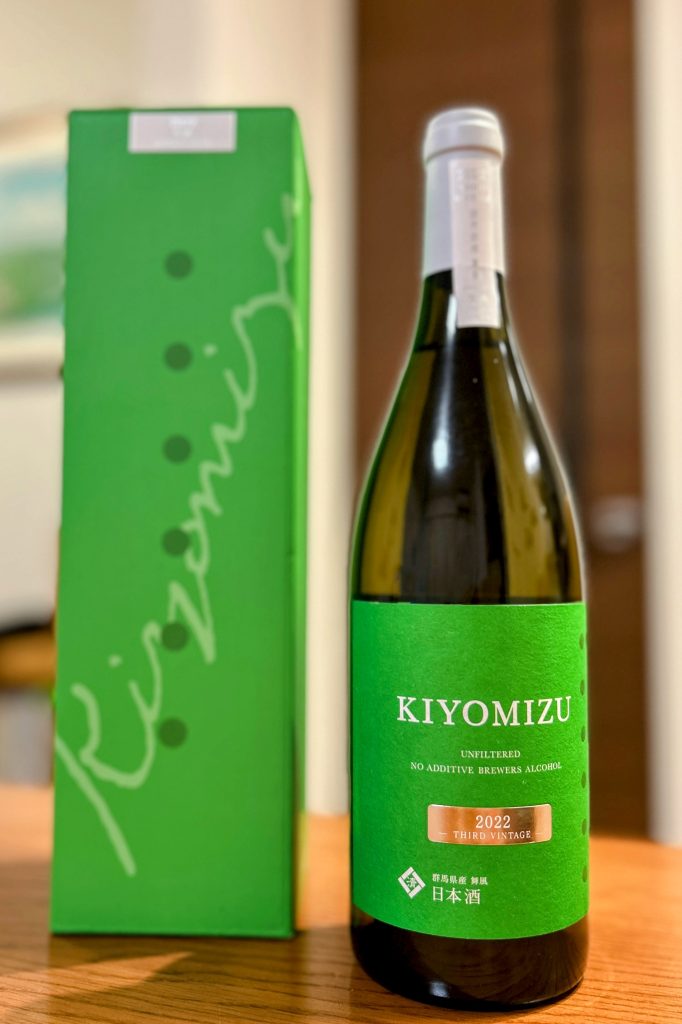
The first thing that catches the eye about this sake is its unique bottle design.
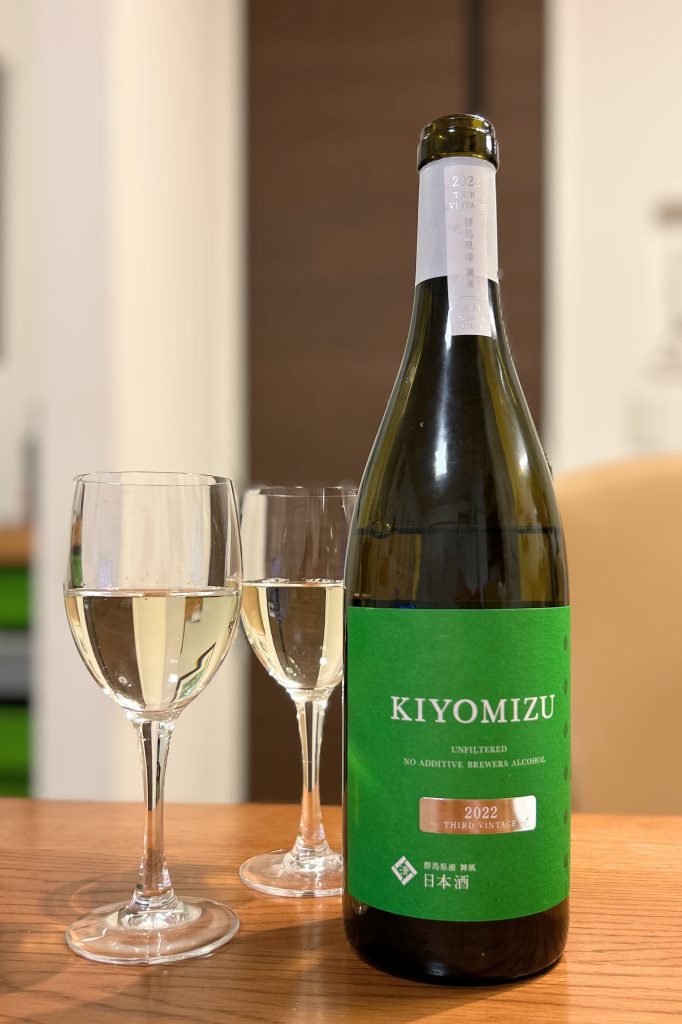
The vivid green label immediately stands out. The front label is entirely in English, clearly targeting an international audience. However, the back label provides a full explanation in Japanese.
The one-piece label design, connecting the front and back, adds a creative touch.
The sake is bottled in a Bordeaux-style bottle, reportedly imported from France. Interestingly, the bottle holds 750ml instead of the usual 720ml for Japanese sake.
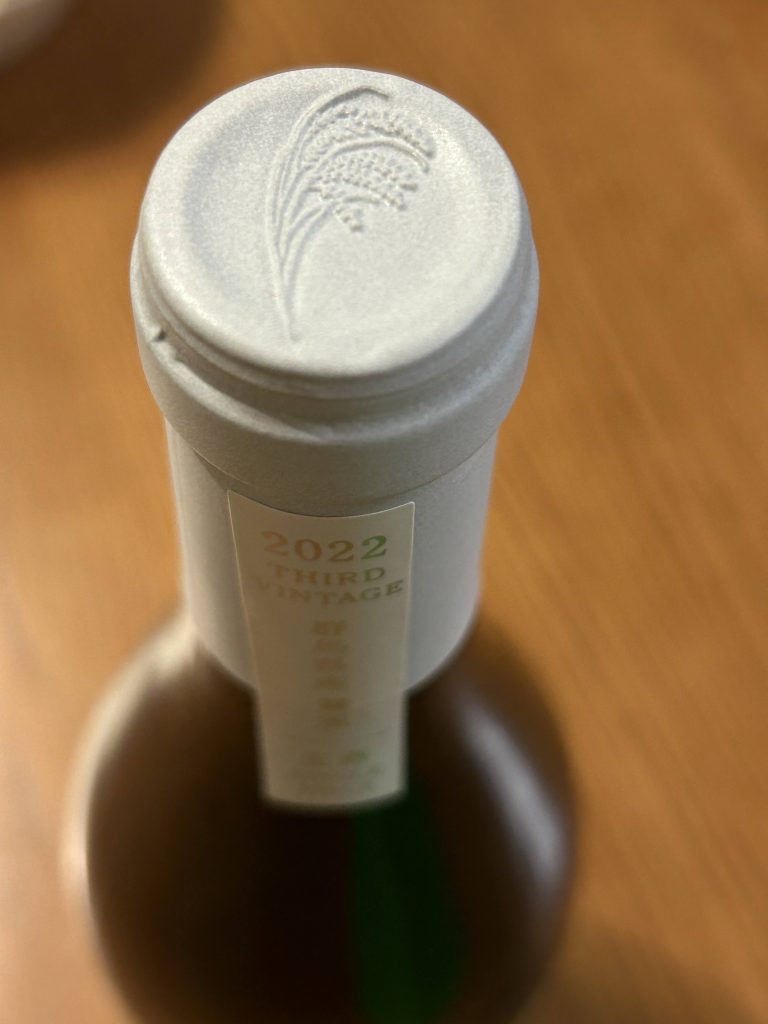
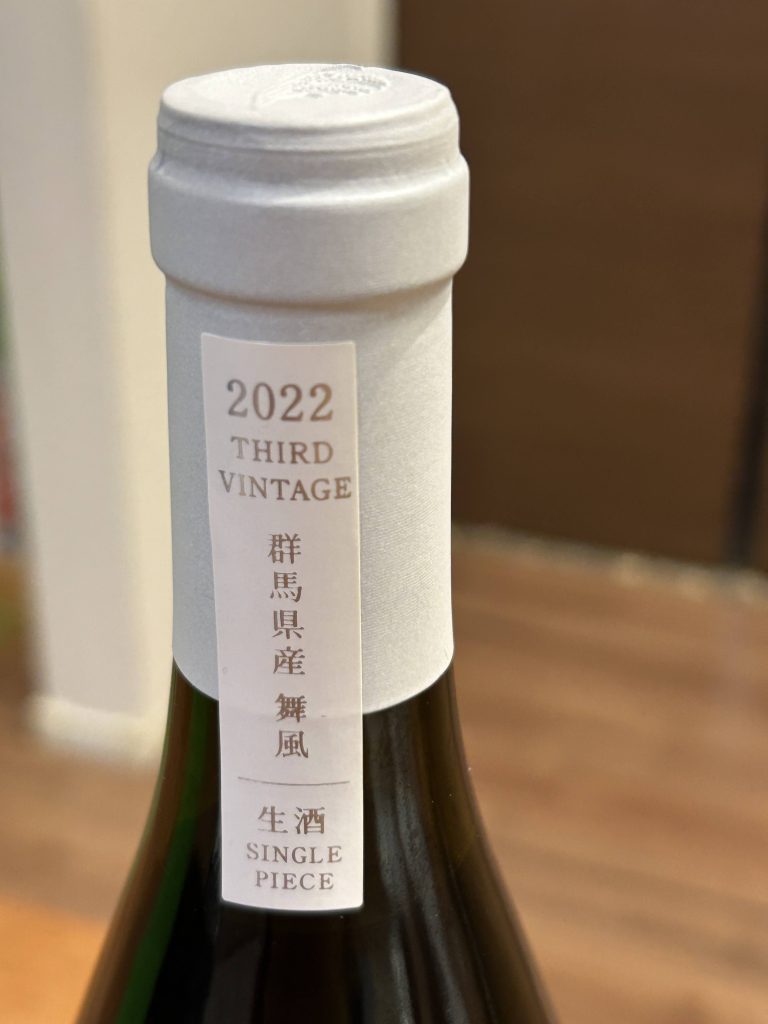
The elegant rice motif on the bottle top adds an extra charm.
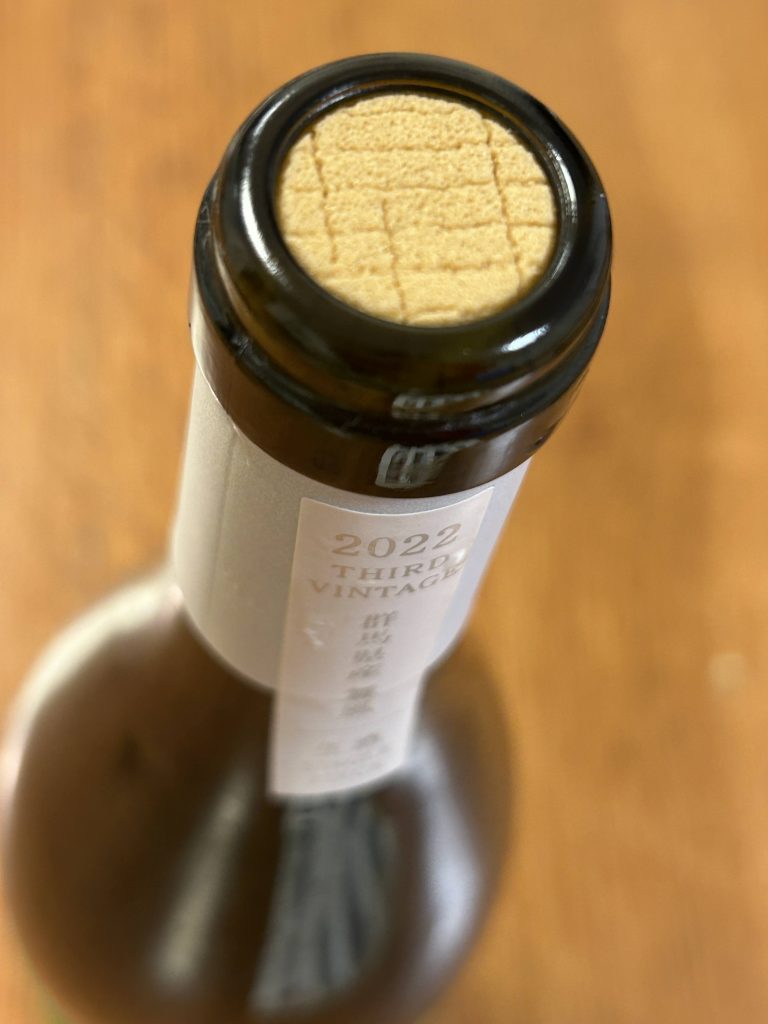
One of the most surprising features is the cork closure.
Unlike the typical screw caps used in sake, this bottle requires a wine opener. While this may seem inconvenient, it might be intended to enhance bottle aging and preservation, much like wine. Though a bit unusual, this bold approach is intriguing!
The Thoughtful Craft Behind KIYOMIZU 50 2022 VINTAGE
This sake is brewed using “Maikaze”, a sake rice variety grown in Gunma Prefecture. Instead of opting for a newly brewed sake, I deliberately chose the 2022 vintage to explore its matured character.
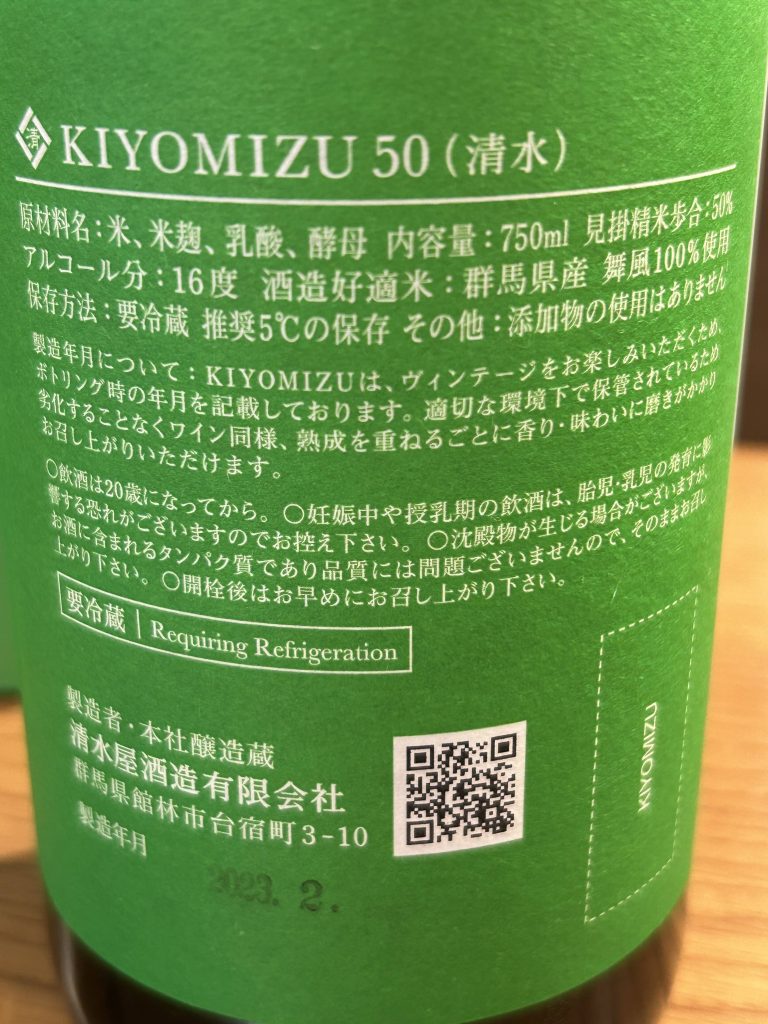
The “50” on the label likely refers to its 50% polishing ratio, meaning it qualifies as a Junmai Daiginjo. Yet, the brewery does not emphasize this classification on the label—a rather unique choice.
Another standout aspect is the detailed ingredient labeling.
It includes lactic acid and yeast, which is rare for sake labels. Furthermore, the label explicitly states “No additives used”.
One might wonder if this subtly implies that some sake producers use undisclosed additives. Regardless, it reflects Shimizuya Brewery’s commitment to transparency in sake-making.
Tasting Experience
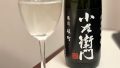
Given the wine-like presentation, I decided to enjoy this sake in a wine glass.
Pouring it into the glass, I noticed a slightly golden hue, different from typical freshly brewed sake.
The taste surprised me—it has a strong acidity rather than a light, crisp finish. Instead of being overly smooth, it offers a solid and structured flavor.
I initially expected a softer alcohol profile due to its aging, but the alcohol presence is quite pronounced.
Considering its 50% polishing ratio, I anticipated a more pronounced fruity Ginjo aroma, but the fragrance is relatively subtle, making the depth of flavor stand out instead. This makes food pairing a key factor in enjoying this sake.
Best Food Pairings
This sake seems to pair better with Western cuisine rather than traditional Japanese dishes.
- Cured meats like prosciutto or Camembert cheese complement its acidity and structure.
- Butter-based dishes, such as Meunière or creamy pasta, would also match well.
I particularly recommend pairing it with cheese, as the saltiness and richness enhance the sake’s depth.
Looking Forward to More from Shimizuya Brewery
This time, I tried KIYOMIZU 50, brewed with “Maikaze” rice, but I am also curious about their sake made with Gohyaku Mangoku rice.
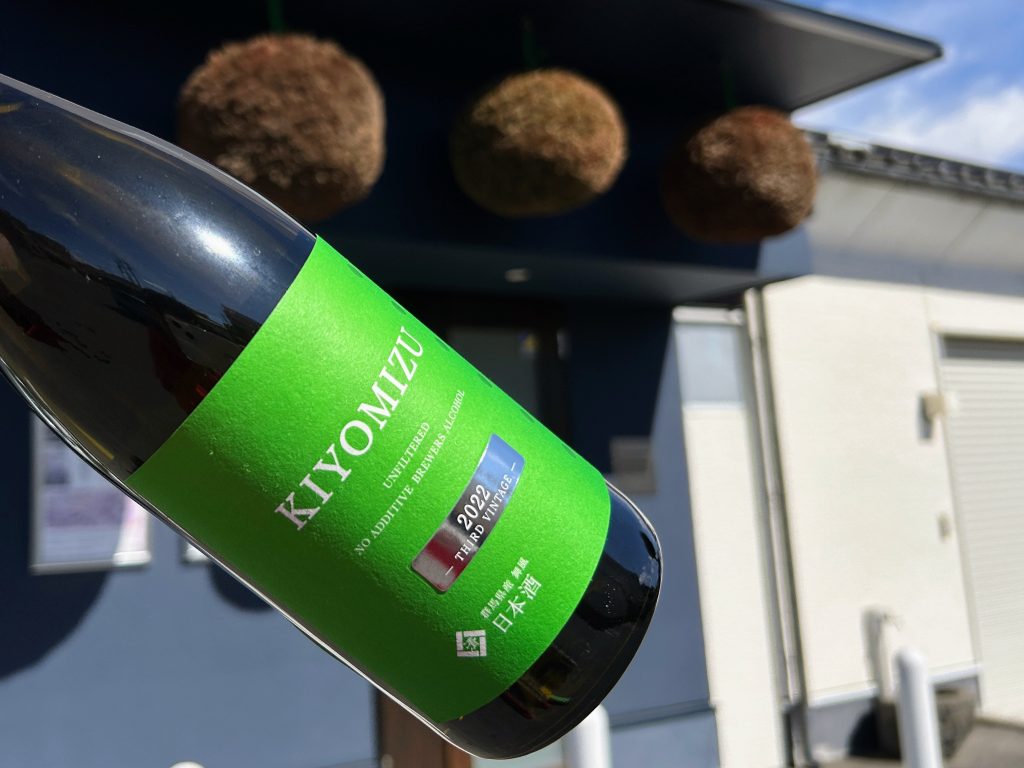
Shimizuya Brewery is still a small, recently revived brewery, but their sake already showcases strong individuality—both in design and flavor. I’m excited to see what they create in the future!
コメント